
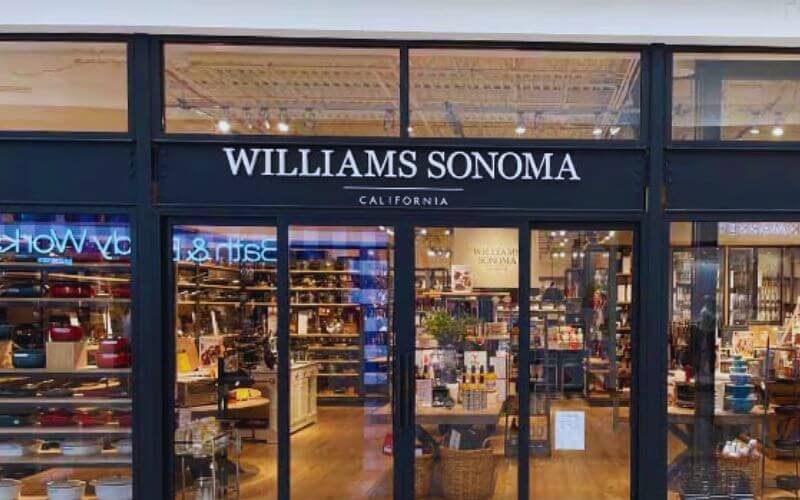


If you’ve walked past a Williams Sonoma lately and seen “Going Out of Business” signs in the window, it’s easy to assume the worst. But there’s a big difference between a store closing and a company shutting down. These are not the same thing.
This article explains exactly what’s happening — which stores are closing, why they’re closing, and what the company’s actual strategy is. If you’re a customer, investor, or just curious, here’s the straight answer.
Williams Sonoma Is Not Going Out of Business
Let’s get this out of the way first. Williams-Sonoma, Inc. is not closing as a company. It has not filed for bankruptcy. There is no company-wide shutdown planned.
Williams-Sonoma is a publicly traded retail company that currently operates around 625 brick-and-mortar stores across the United States. On top of that, it runs a large e-commerce operation and ships to more than 60 countries.
The company owns several well-known brands beyond Williams Sonoma itself — including Pottery Barn, West Elm, Pottery Barn Kids, PBteen, Mark and Graham, and Rejuvenation. All of these brands continue to operate.
What is actually happening is a multi-year plan to close underperforming store locations. That’s a deliberate business decision, not a sign that the company is falling apart.
The San Francisco Union Square Flagship Is Closing — Here’s Why
The closure getting the most attention right now is the three-story Williams Sonoma flagship at 340 Post Street in San Francisco’s Union Square. That store is closing by the end of January 2026, after 23 years at that location.
The reason has nothing to do with Williams Sonoma’s financial health. Chanel purchased the building in 2022 for approximately $63 million and plans to convert it into a luxury fashion flagship. When your landlord sells the building to Chanel, you don’t get to stay.
This closure is notable because it marks the first time in nearly 70 years that San Francisco has no Williams Sonoma retail location. That’s a significant moment for the brand, given that the company has deep roots in the city.
Customers visiting the store during its wind-down period have reported clearance discounts of 30 to 40 percent. That’s standard practice for any store closing a specific location — it’s not a sign that the entire company is liquidating.
Bay Area shoppers still have options. Williams Sonoma continues to operate locations in Walnut Creek, San Ramon, Corte Madera, San Mateo, Palo Alto, and Santa Clara. The brand hasn’t left the region — it’s just leaving one address.
Other Recent Store Closures Across the U.S.
San Francisco isn’t the only city seeing a Williams Sonoma close. Several other locations have shut down or announced closures recently.
- Temecula, CA (Promenade Temecula Mall) — Closed with heavy markdowns, including 40% off food items. Customers were directed to nearby stores and online.
- Wichita, KS (Bradley Fair) — Confirmed closure on January 21. The company’s website pointed shoppers to stores in Tulsa and Leawood.
- Emeryville, CA (Bay Street Mall) — Closed in January, with customers redirected to the Walnut Creek location.
- Lehigh Valley Mall, PA — Announced closing with most of the stock already sold down.
- Connecticut outlet store — The only Williams Sonoma outlet in the state closed on January 19.
Notice a pattern in each of these cases: customers were sent to nearby stores or the company’s website — not to a liquidation hotline. That’s how a company that’s still operating handles a location closure. It’s not how a company going out of business behaves.
The Business Logic Behind Closing Stores
So why is Williams Sonoma closing stores across the country? The short answer is that it’s cheaper and more profitable to operate fewer, better-performing locations.
CFO Sharon McCollam has been direct about this. The goal is to optimize cost per square foot across the store portfolio — particularly in large urban markets where rent is expensive relative to what those stores actually bring in.
There’s also a practical timing factor. Around 25% of all leases across Williams-Sonoma’s brands were set to expire within a three-year window. When a lease comes up, management has a choice: renew at the current rate, renegotiate, relocate, or walk away. For underperforming locations, walking away often makes the most financial sense.
The company reportedly closed a net 33 stores in 2020 and is on track to close up to 150 stores total across all brands by the end of 2026. That sounds like a lot, but when you consider it spans multiple brands and plays out over several years, it’s a planned reduction — not a collapse.
Think of it the way a restaurant group might close two or three locations that aren’t hitting their numbers, while keeping the rest open and profitable. It’s portfolio management, not failure.
What This Means If You’re a Customer
If your local Williams Sonoma is closing, here’s what you need to know practically.
First, check the store locator on the Williams Sonoma website. It shows current open locations near you. If the store you visited is closing, there may be another location within a reasonable drive.
Second, online shopping remains fully available. The company ships nationwide and internationally. If you’ve relied on a local store for things like cooking demos or in-person browsing, that experience is harder to replace — but the products are still accessible.
Third, if you see a clearance sale at a closing location, those discounts are real and worth taking advantage of. Just understand you’re buying from a store that’s closing, not a company going under. Returns and warranties still apply through the main company.
How to Tell the Difference Between a Store Closing and a Company Closing
This confusion comes up every time a well-known brand closes a high-profile location. It’s worth knowing what to look for.
A store closing typically involves clearance sales at that specific location, staff being let go or transferred, and the company redirecting customers to other stores or its website. That’s what Williams Sonoma is doing.
A company closing involves bankruptcy filings, all locations shutting at once, and no ongoing e-commerce or operations. Williams-Sonoma has done none of those things.
When you see a local “Going Out of Business” sign, it’s worth taking 60 seconds to check whether the company itself is still operating before drawing conclusions. A quick search on the company’s website or a look at recent business news coverage will usually give you a clear answer.
For businesses watching their own competitive landscape, resources like eBusiness Voice can help you track retail trends and understand what these kinds of strategic shifts actually signal for a given industry.
What About Pottery Barn and West Elm?
If you’re a fan of Williams-Sonoma’s sister brands, there’s nothing in the current news to suggest those are in trouble either. Pottery Barn, West Elm, and the other brands in the portfolio continue to operate across hundreds of locations.
The store optimization strategy applies across all the company’s brands — meaning some Pottery Barn and West Elm locations may also close over time if they’re not performing. But again, that’s a sign of managed operations, not a brand in freefall.
The Bottom Line
Williams Sonoma is not going out of business. What’s happening is a deliberate, multi-year effort to trim underperforming store locations while maintaining a strong online business and keeping profitable stores open.
The San Francisco Union Square closure is the most visible example right now, but it happened because Chanel bought the building — not because Williams Sonoma ran out of money. Other closures across the country follow the same logic: leases expired, rents weren’t justified by sales, and the company chose not to renew.
If you want to keep shopping the brand, your options are to find a nearby location or order online. The company is still very much in business. The store in your neighborhood may not be — and that’s a real difference worth understanding.
Also Read: